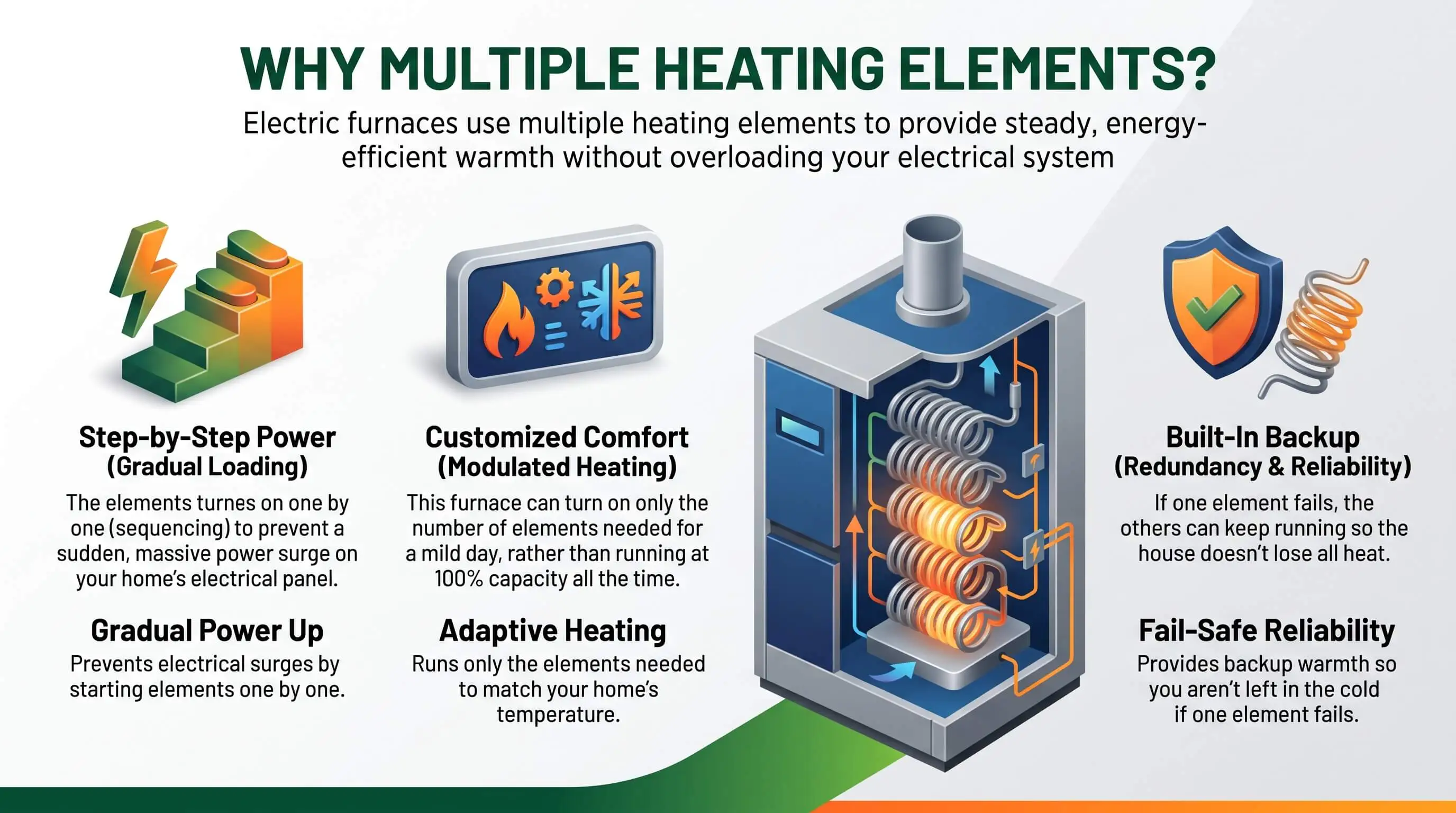
Pull the service panel off an electric furnace and you'll find a row of coiled heating elements, three to seven of them, wired to switch on one after another. That's deliberate. Staggering the elements spares your home's wiring one big jolt of current and lets the furnace scale its output to the weather. And if one burns out, you lose a slice of your heat instead of all of it.
If electric heat is new territory for you, start with this plain-language guide to what an electric furnace is and how it works. In one line, an electric furnace warms air over electric resistance coils and blows it through your ducts. Those coils sit in a hidden corner of your home, and the filter you change a few times a year shapes how well they work.
TL;DR Quick Answers
what is an electric furnace
An electric furnace is a forced-air heater that runs on electricity alone. It passes room air over staged electric resistance coils, then a blower sends the warmed air through your ducts. Nothing burns inside the cabinet, so the furnace makes no carbon monoxide, and its filter protects both the coils and the air you breathe.
How it heats: A sequencer switches on three to seven elements, usually about 5 kW each, one at a time so your wiring never takes a single big jolt.
Where it fits: It shares ductwork with central air conditioning and often serves as backup heat for a heat pump.
What it costs to run: It turns all the electricity it uses into heat, yet a heat pump can do the same job with about 50% less electricity.
The part you control: A clean filter keeps air moving across every coil, stops the limit switch from shutting the heat off, and keeps the air your family breathes cleaner.
Top Takeaways
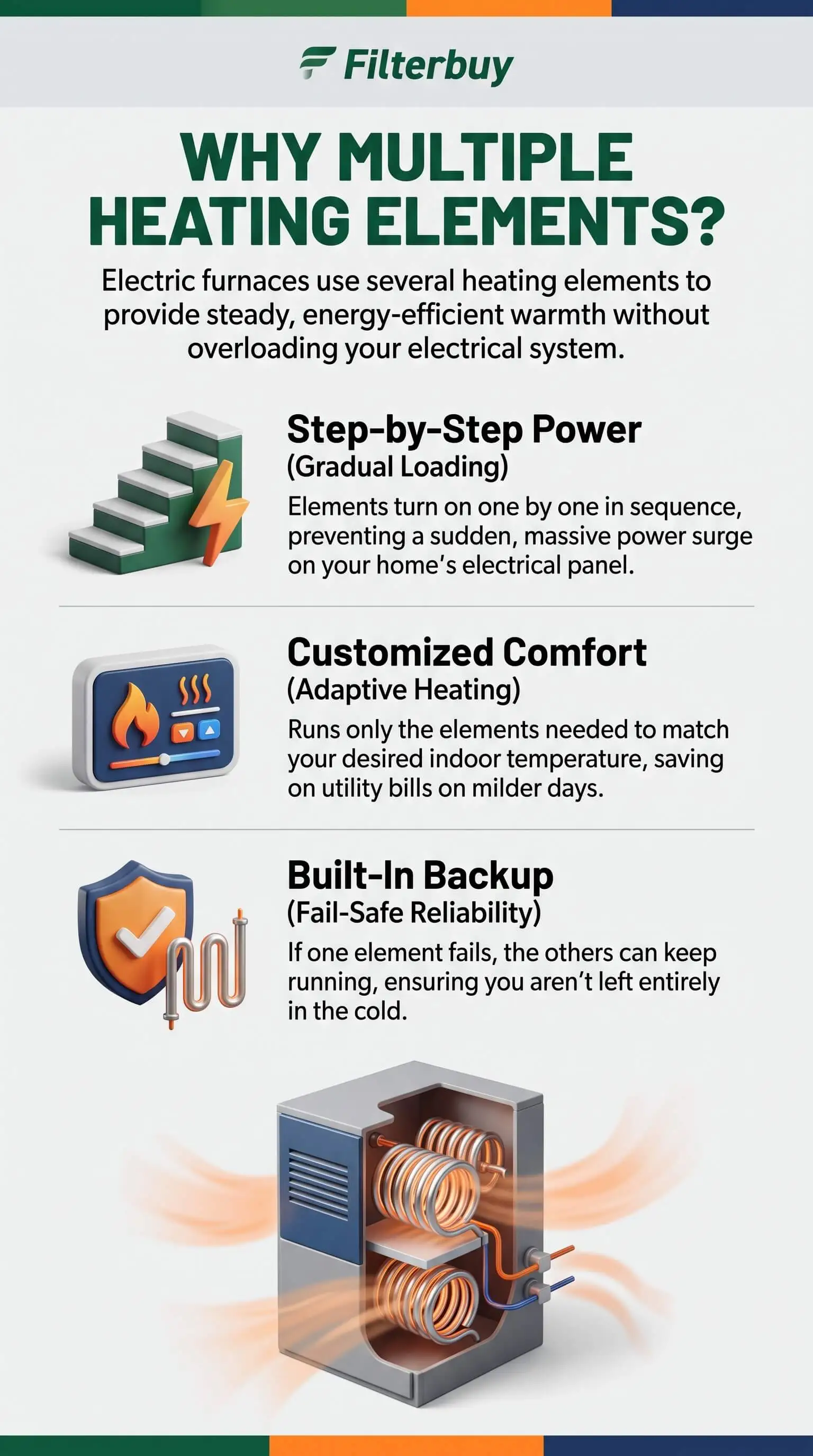
Staging is the point. Several smaller elements protect your wiring and let the furnace match its output to the weather.
One failure won't leave you cold. If an element burns out, the others keep heating at reduced output.
Typical setup: three to seven elements at about 5 kW each, according to the Department of Energy.
The sequencer sets the pace. It brings elements on a few seconds apart.
Weak heat is a clue. Lukewarm air or longer run times often point to an element or sequencer stage that has quit.
Airflow protects everything. A clogged filter can trip the limit switch and wear out elements and contacts sooner.
What Is an Electric Furnace?
An electric furnace is a forced-air heater that runs on electricity alone. Current flows through coils of nichrome wire, the coils heat up fast, and a blower pushes room air across them and out through the same ducts your air conditioner uses.
Like any central heating furnace, it draws air in through a return, warms it, and sends it back to your rooms. Nothing burns inside the cabinet, which means the furnace itself produces no carbon monoxide.
Why Are There Several Heating Elements Instead of One Big One?
The U.S. Department of Energy puts the typical count at three to seven elements per furnace, each usually rated around five kilowatts. The furnace switches them on in stages so it doesn't overload your home's electrical system, and that pays off in more than one way.
Your wiring gets a gentler start. One 5 kW element on a 240-volt circuit draws about 21 amps. Fire four at once and you're asking for more than 80 amps in a single instant. Stepping them on is much easier on breakers and wiring.
Heat output follows the weather. Each 5 kW element adds roughly 17,000 Btu per hour. A mild morning may need one or two stages. A hard freeze calls in the whole bank.
A spare is already built in. When one element burns out, the rest keep heating, so the house runs cooler instead of going cold overnight.
How the Sequencer Brings Each Element Online
The sequencer is the traffic cop inside the cabinet, and on many newer furnaces a control board does the same job. Here's what happens once you nudge the thermostat up.
The thermostat calls for heat.
The sequencer powers up the first element.
The blower kicks on after a short delay, so the vents don't greet you with cool air.
The sequencer adds the remaining elements one at a time, usually a few seconds apart.
A high-limit switch cuts power to the elements if the cabinet runs too hot.
At your setting, the elements shut off and the blower runs a bit longer to clear leftover heat.
Timing varies by model. The heat still builds in layers.
How Many Heating Elements Does an Electric Furnace Have?
Most land inside that Department of Energy range from three to seven, and the kilowatt rating gives the count away. Built from 5 kW elements, a 15 kW unit carries three and a 20 kW unit carries four.
A Manual J load calculation sets the right total for your home's size, insulation, windows, and climate. Larger furnaces often run on more than one circuit, so whoever works inside should switch off every breaker that feeds the unit.
Signs One of Your Heating Elements Is Not Working
With the others picking up the slack, a dead element rarely makes a scene. Watch for these clues:
Vent air feels lukewarm.
The furnace runs longer than it used to.
On the coldest days, a room or two never quite catches up with the rest of the house.
A breaker trips as the heat starts.
A burning smell lingers well past startup. A short, dusty whiff on the first cold day of the season is normal.
Pro Tip: Swap the filter and check your breaker panel first. If the heat stays weak, call a licensed technician, since testing elements means working around 240-volt circuits.
Why Airflow and a Clean Filter Matter to Every Element
Don't take that filter for granted! It's the one piece of this system you control. Elements need steady airflow to carry their heat away, and the Department of Energy notes that the furnace's limit controller may shut it down if the blower fails or a dirty filter chokes off airflow.
Then the elements overheat, the limit trips, the house cools, and the cycle repeats, wearing on elements and sequencer contacts each round. A clean filter keeps air moving across every coil and keeps the air your family breathes cleaner too. The EPA recommends a filter rated MERV 8, or as high as your system can handle, replaced on the manufacturer's schedule.
Electric Furnace Elements vs. Heat Pump Auxiliary Heat
A heat pump's air handler often holds heat strips that stage in the same way and step in as auxiliary or emergency heat when the heat pump falls behind.
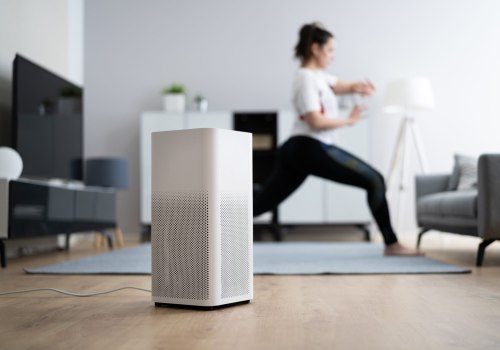
I'll be straight with you about the cost. The Department of Energy says a heat pump can cut electricity use by about 50% compared with resistance heat. An electric furnace still earns its place in mild climates, additions, and homes that value simple equipment. Pairing your heating system with air purifiers also offers additional indoor air filtration without changing how your furnace operates.
"The weak-heat call I get most often in my years servicing electric furnaces comes down to one sequencer stage that quit closing, so a 20 kW unit quietly runs on 15 kW while the family figures winter just got colder. More often than not, a clogged filter helped wear those contacts out."
Essential Resources
1. Compare Heat Pumps Before You Replace Electric Heat
See how a certified heat pump compares before you replace an aging furnace.
ENERGY STAR: Air-Source Heat Pumps
2. Pick a Filter That Protects Your Elements and Your Lungs
MERV ratings and change intervals in plain terms, so your filter cleans the air without starving the elements.
U.S. EPA: Guide to Air Cleaners in the Home
3. Keep Heating Season Safe
No flame, yet heating equipment still needs space and care. These habits apply to electric units too.
NFPA: Safety With Heating Equipment
4. Understand How Your Furnace Should Be Sized
The sizing standard to ask about before you approve a new furnace.
Building America Solution Center: ACCA Manual J
5. Brush Up on Home Electrical Safety
Your furnace is a big electrical load. Learn where DIY should stop.
Electrical Safety Foundation International: Electrical Safety for Homeowners
6. See What Switching From Resistance Heat Can Save
How fast a heat pump pays for itself in Texas homes that heat with electric resistance.
ACEEE: Heat Pumps Would Save Many Texas Households $300 Annually
7. Know What a Home Inspector Looks For
What a trained inspector checks on electric furnaces.
InterNACHI: How to Inspect HVAC Systems
Supporting Statistics
1. Electric furnaces typically use three to seven heating elements of about 5 kW each, switched on in stages.
The staging keeps the home's electrical system from overloading.
A heat pump can cut electricity use by about 50% compared with resistance heat.
Source: U.S. Department of Energy, Electric Resistance Heating
2. Space heating made up 12% of residential electricity use in 2020.
That ties for second among home electricity uses, behind air conditioning.
Homes in the South are more likely to heat with electricity.
Source: U.S. Energy Information Administration, Electricity Use in Homes
3. Fire departments responded to an estimated 27,900 residential building heating fires in 2023.
They caused 115 deaths, 525 injuries, and $488 million in losses.
The totals cover every type of heating equipment.
Source: U.S. Fire Administration, Residential Building Heating Fire Trends
Electric furnaces rely on multiple heating elements and account for a significant share of household electricity use, while heating equipment remains a fire safety concern. Regular maintenance, proper airflow, and high quality filters are essential for protecting HVAC components, maintaining heating efficiency, and reducing the risk of overheating.
Final Thoughts and Opinion
I used to assume more elements simply meant a bigger heater. Watching the sequencer hand off from coil to coil, it's clear the design is about control far more than size.
Here's my honest opinion. You don't need to memorize which stage fires when. Notice when your heat feels weaker than it used to, and treat the filter as part of the heating system. Among the different types of furnace filters, MERV 8 pleated filters are a practical choice for capturing common household dust and pollen while maintaining proper airflow when correctly sized and compatible with your system. It's the cheapest protection you can give every element in that cabinet, and an easy way to look after your family, your home, and your HVAC at once. If I were weighing a replacement, I'd give a heat pump a serious look and keep these same elements as backup.
Frequently Asked Questions
Can an electric furnace run with one bad heating element?
Yes, with less heat. Lukewarm air and longer run times are the giveaways. Have a licensed technician test the elements and sequencer, because running short all season works the remaining parts harder.
What does a sequencer do in an electric furnace?
It turns the heating elements on one at a time so the electrical load never spikes, then shuts them off once the thermostat is satisfied. Newer furnaces may use a control board instead.
How many kW does an electric furnace use?
The Department of Energy says elements usually run about 5 kW each, and most furnaces carry three to seven of them. A Manual J load calculation tells you the right total for your home.
Why is my electric furnace blowing cool air?
Usual suspects are a failed element or sequencer stage, a tripped breaker, or a limit switch opened by restricted airflow. Change the filter and check breakers, then call a licensed technician if it continues.
Are heat strips the same as electric furnace elements?
They work the same way, as staged resistance elements in a heat pump's air handler that supply auxiliary or emergency heat.
Can a dirty filter cause heating elements to shut off?
Yes. A dirty filter restricts airflow, the cabinet overheats, and the limit controller cuts power to the elements, as the Department of Energy notes. Changing the filter on schedule prevents it.
Keep Every Heating Element Doing Its Share
Your electric furnace spreads its heat across several elements so it can protect your wiring, keep pace with the weather, and keep running when one part wears out. Help every one of them do its job by changing your filter on schedule and having a licensed technician check the elements and sequencer before the cold season starts.